From understanding a need to building and running the solution.
A background in information security, production infrastructure and leading technical teams. These independent projects put that experience into practice: understanding requirements, choosing the architecture, and taking responsibility for delivery and ongoing improvements, with coding agents supporting development.
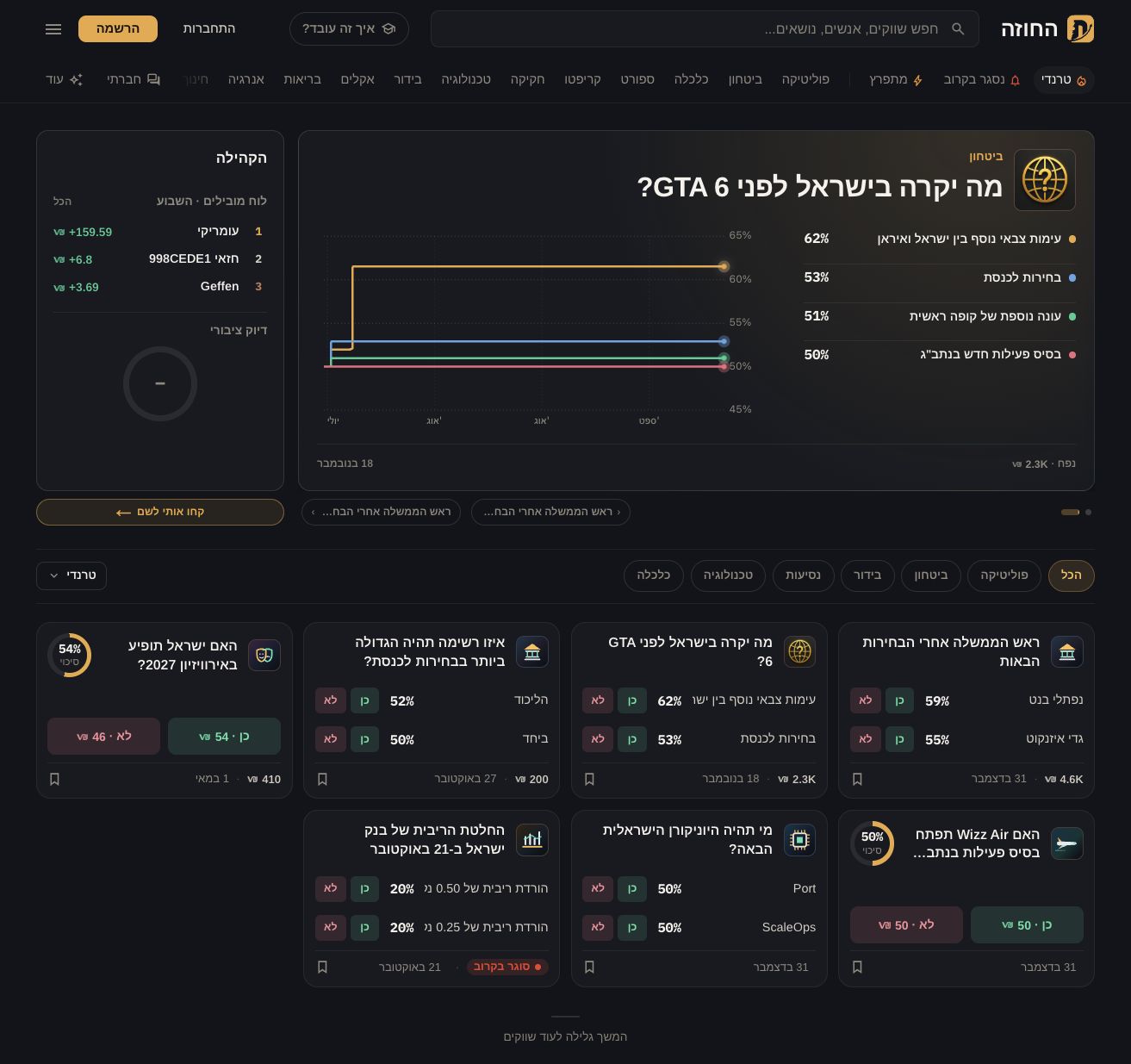
A Hebrew-first prediction market with a closed virtual economy. Discover markets, trade positions, and follow outcomes resolved against recorded evidence.
Hachozeh / public site / October 2026
My role
Created Hachozeh from scratch, owning the product direction and architecture from the first HTML and vanilla-JavaScript version through launch. Later chose Astro's multi-page architecture to prioritize loading speed, then refined page transitions to keep navigation smooth as the platform grew.
Trading corePricing · Balances · Ledger
SeerMarket proposals
Oracle / HorizonEvidence · Lifecycle
Engineering & lessons
Astro's open-source nature also mattered to me. Client-side transitions, prefetching, and a persistent header complemented server-rendered pages; page scripts needed lifecycle fixes. Fastify, Zod, and Commander replaced custom backend plumbing without rewriting the trading engine or database. Preact islands stopped portfolio search and sorting from rebuilding whole sections and re-mounting charts, while preserving the data layer. Each migration addressed a concrete need.
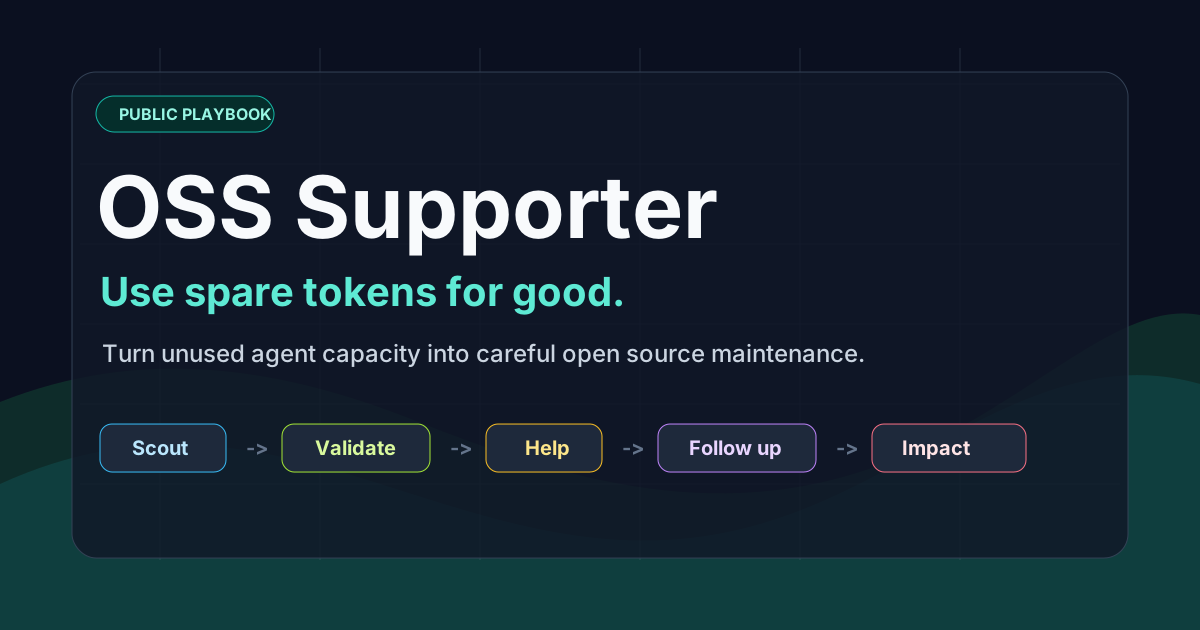
A repeatable contribution workflow that puts otherwise-unused coding-agent capacity to work for open-source projects, from choosing an issue to verification and maintainer follow-up.
OSS Supporter / project banner
My role
Designed the workflow, selection rules, and verification gates to give back to open source. The process lives in the repository, not a chat history: a fresh agent can start from a copy, and others can reuse the structure across Windows, macOS, and Linux workstations.
60Merged pull requests
33External repositories
Verified October 20, 2026. Public, merged PRs; personal repositories excluded.View contribution record
Screening excludes stale issues, duplicate work, and repositories that prohibit AI-assisted contributions. The evidence is in the accepted patches, including worker limits in KICS, streaming Markdown fixes, and event-delivery backpressure in Saluki.
An experiment in giving Codex a structured process for authorized penetration testing and vulnerability research, connecting tools, research state, and evidence.
My role
Designed the architecture, authorization boundaries, and evidence requirements. When formal stages and logging displaced useful investigation, paused development and turned to hands-on Hack The Box training to understand the methodology firsthand before continuing.
Engineering & lessons
A shared Python control plane serves CLI and MCP interfaces with persistent state and evidence records. Codex did much of the investigation independently of the harness, which became mainly a place to document activity. The lesson was a workflow-design limitation: completing stages is not the same as advancing research. Hands-on study continues; development remains paused, with no claim of proven autonomous vulnerability discovery.
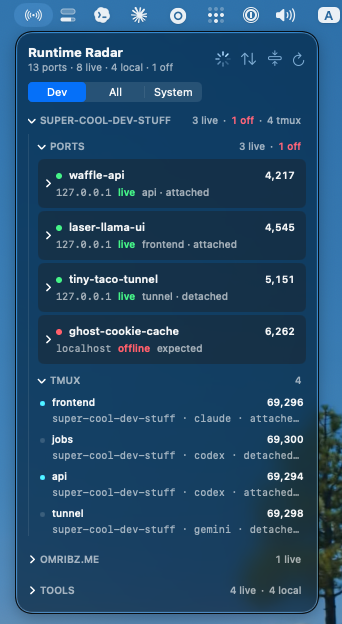
A macOS menu bar app and CLI that organize local ports, services, and tmux workers by project. Built out of a need during Hachozeh's development and used during active project work.
Runtime Radar / macOS menu bar
My role
Chose a project-first view over a flat process list to make frontend servers, backend services, and background workers easier to track. Led the architecture and implementation with coding agents.
Engineering & lessons
A shared detector links ports to tmux processes where possible and identifies Git repositories from their working directories. Manual labels cover exceptions and keep expected services visible when offline. Monitoring is local, not remote; no telemetry.
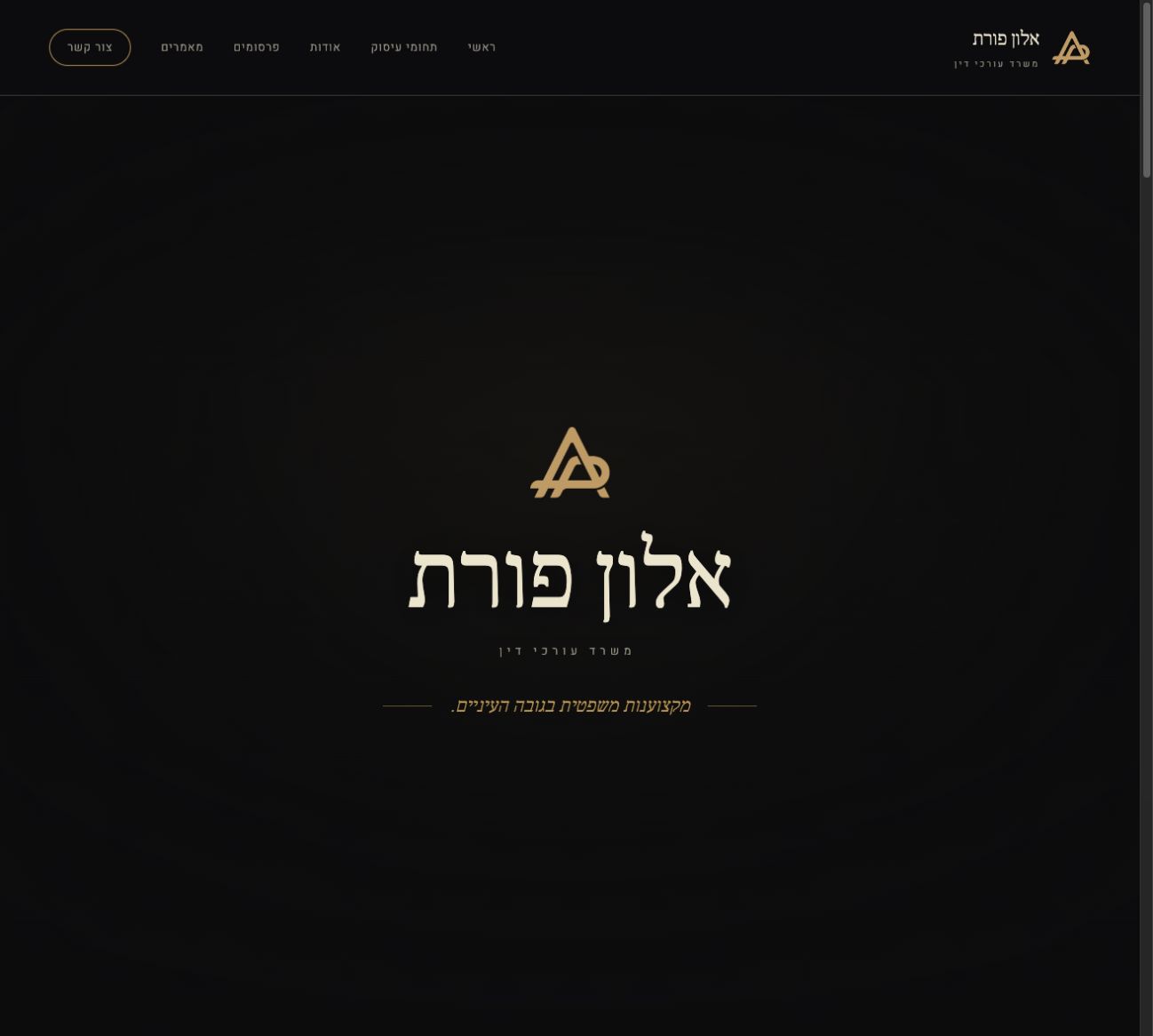
A tailored Hebrew website for a law practice, turning the client's needs into a complete online presence after the previous site went offline.
Alon Porat / public site / October 2026
My role
Translated the client's needs and practice priorities into the site's structure, content flow, and visual design. Owned delivery from requirements and domain purchase through agent-assisted implementation, technical setup, and launch. Continue to maintain the site after handover.
Engineering & lessons
Responsive pages, contact-form integration, search metadata, security headers, and domain configuration. Private client source; the live site is available to explore.
The site you're on. An Astro-based home for writing and projects, with paired English and Hebrew routes, RTL support, and a shared publishing workflow.
My role
Set the site's direction and technical approach, adapting Peter Steinberger's site and AstroPaper with coding-agent assistance.
Engineering & lessons
Content, layout, deployment, and security-header customization. Upstream attribution is preserved.
Start by understanding who needs the solution, what is getting in their way, and how it will be used. Research the options, consult people, and weigh security, performance and maintenance before choosing the technology. Take responsibility beyond the first working version: deployment, troubleshooting and improvements are part of delivery. Hachozeh and the client website both grew from that approach, with different needs shaping different decisions.
Codex and Claude Code are part of the development process, contributing ideas and substantial implementation work. Setting direction, choosing between approaches, and checking the result remain my responsibility. Decisions, instructions, and context stay in the repository so a fresh agent or another workstation can pick up the work without depending on one chat.
A structured process still has to help the actual work. When the research harness became better at recording activity than supporting investigation, the next step was to pause development and turn to hands-on security training. Knowing when to rethink an approach matters as much as getting it built.
Build for the environment people use: websites that adapt to phones, tablets, and desktops, and reusable workflows that can move between supported operating systems. Each project states its actual platform support rather than promising to run everywhere.
Always open to interesting problems and good people to work with, whether improving infrastructure, making systems more secure, or building useful applications and automation. Let's compare notes.